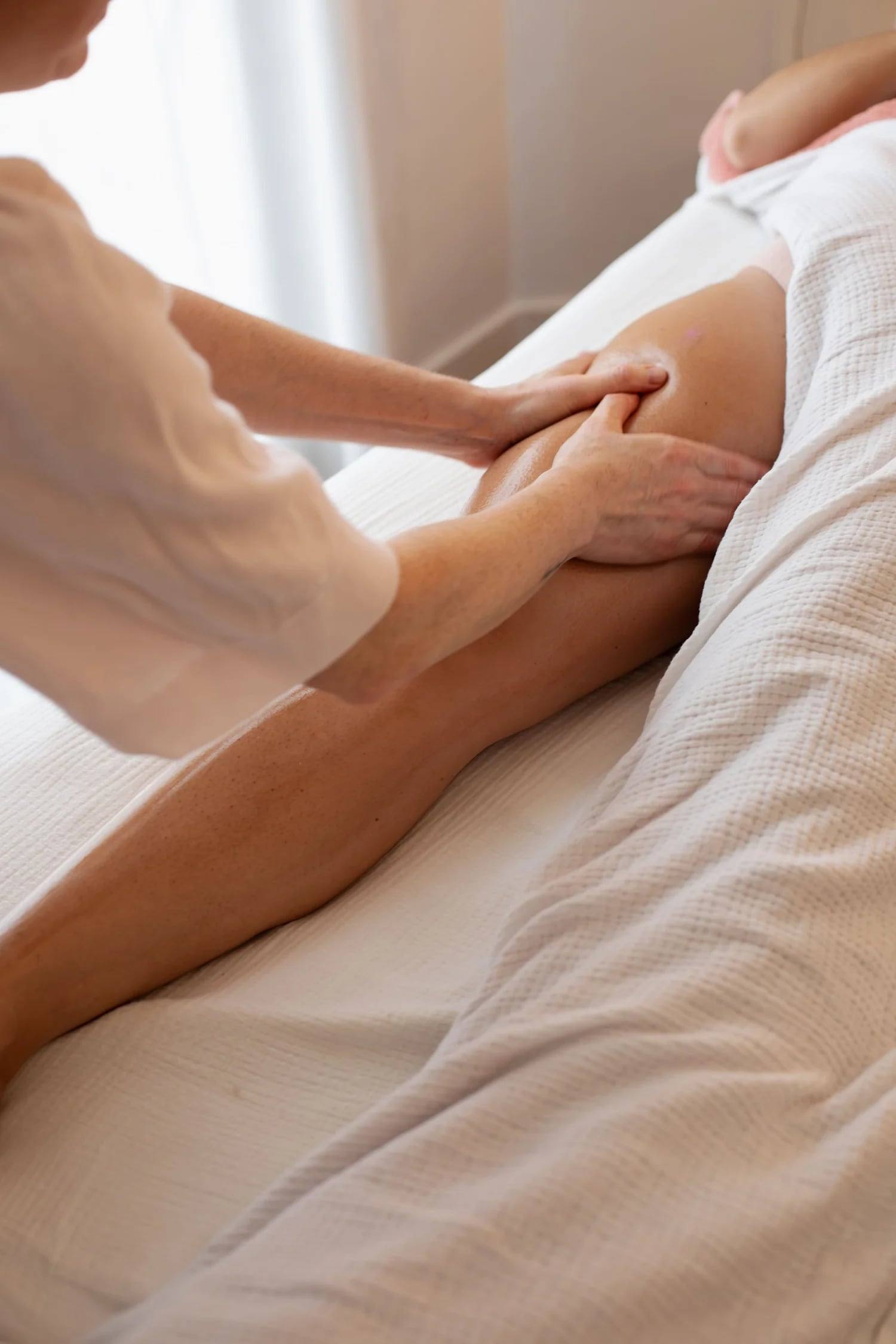
Lymphatic drainage is a gentle technique that stimulates the circulation of lymph, encourages the elimination of toxins, and brings lightness and well-being. Discover how to practice it effectively at home.
- Prepare the body
- Start with the neck and the collarbones
- Massage the arms and the hands
- Stimulate the legs and the feet
- Finish with the belly
- Recommended frequency for lymphatic drainage
- Accessories and complementary techniques
- FAQ – Lymphatic drainage: frequently asked questions
- Conclusion
What is lymphatic drainage?
Lymph circulates throughout the body and helps eliminate toxins, regulate fluids, and support the immune system.
- When its circulation slows down, you may feel heavy legs, water retention, fatigue, or a dull complexion.
Lymphatic drainage makes it possible to restart this circulation and improve general comfort.
Benefits of lymphatic self-drainage
-
Reduced swelling and water retention
-
Improved blood and lymphatic circulation
-
Firmer, more radiant skin
-
A relaxing effect and reduced stress
-
Support for the immune system
How to do lymphatic drainage yourself in 5 steps
1. Prepare the body
-
Choose a quiet place
-
Wear comfortable clothing
-
Lie down or sit comfortably
-
Lightly hydrate the skin
2. Start with the neck and the collarbones
-
Gently massage the sides of the neck and the top of the collarbones
-
Make slow, light circular movements
-
Always massage from the outer areas toward the main lymph nodes
3. Massage the arms and the hands
-
Move the lymph up from the hands toward the armpits
-
Use gentle circular movements
-
Never press too hard
4. Stimulate the legs and the feet
-
Massage from the ankles toward the knees, then toward the thighs
-
Make upward, circular movements
-
Helps relieve heavy legs and encourage circulation
5. Finish with the belly
-
Massage the lower belly with clockwise circles
-
Encourages the elimination of toxins and completes the drainage
Tip: every movement should be slow, gentle, and steady.

Recommended frequency
-
2 to 3 times a week for regular maintenance
-
15 to 30 minutes per session
-
Drink water after the session to help eliminate toxins
Tip: accessories and complementary techniques
-
Soft brushes or massage gloves (optional)
-
Specific rollers for lymphatic stimulation
- What matters most remains technique and consistency
Conclusion
Lymphatic drainage done yourself is a simple, effective way to:
-
improve lymphatic circulation
-
reduce water retention
-
encourage relaxation and well-being
-
improve the look and tone of the skin
By following these 5 steps consistently, you get the full benefits of this technique at home.
FAQ
How do you do lymphatic drainage yourself at home?
To do lymphatic drainage at home, use slow, gentle, circular movements, always directed toward the lymph nodes (neck, armpits, groin). Start with the neck and the collarbones, then the arms, the legs, and finish with the belly. A session lasts between 15 and 30 minutes.
How often should you do manual lymphatic drainage?
The ideal frequency for lymphatic drainage is 2 to 3 times a week for regular maintenance. In the case of heavy legs or water retention, it can be practiced more often with very light pressure.
What are the benefits of lymphatic drainage?
Lymphatic drainage helps to:
-
reduce water retention and swelling
-
improve lymphatic and blood circulation
-
relieve heavy legs
-
encourage the elimination of toxins
-
improve the look and firmness of the skin
-
bring a feeling of relaxation and well-being
Does lymphatic drainage reduce a swollen belly?
Yes, lymphatic drainage of the belly can help reduce bloating and the feeling of a swollen belly by stimulating the elimination of toxins and accumulated fluids, provided it is practiced regularly.
Can you do lymphatic drainage every day?
Yes, daily lymphatic drainage is possible if the movements remain very gentle. However, for most people, 2 to 3 sessions a week are enough to obtain visible, lasting results.