How can I nourish my skin from within for a radiant complexion?
The answer is on your plate! Rather than relying solely on creams and treatments, adding certain key foods to your diet is the best way to give your skin the essential nutrients it needs to stay healthy, hydrated, and luminous.
1. Why are oily fish the champions of omega-3s?
Oily fish such as salmon, mackerel, and sardines are nutritional treasures. They are particularly rich in omega-3 fatty acids, essential nutrients that our body cannot produce on its own.
What are the benefits of oily fish for the skin?
- They reduce inflammation: omega-3s calm the redness and irritation associated with skin concerns such as acne and eczema.
- They strengthen the skin barrier: these fatty acids maintain the skin’s protective layer, which retains moisture and keeps toxins out.
- They protect against UV rays: although they do not replace sunscreen, they offer additional protection and help with cell repair after sun exposure.
Practical tip: try to include 2 to 3 servings of oily fish a week in your diet. Vegetarians and vegans can turn to flaxseed, chia seeds, and walnuts.
2. Why are berries and colorful vegetables an antioxidant shield?
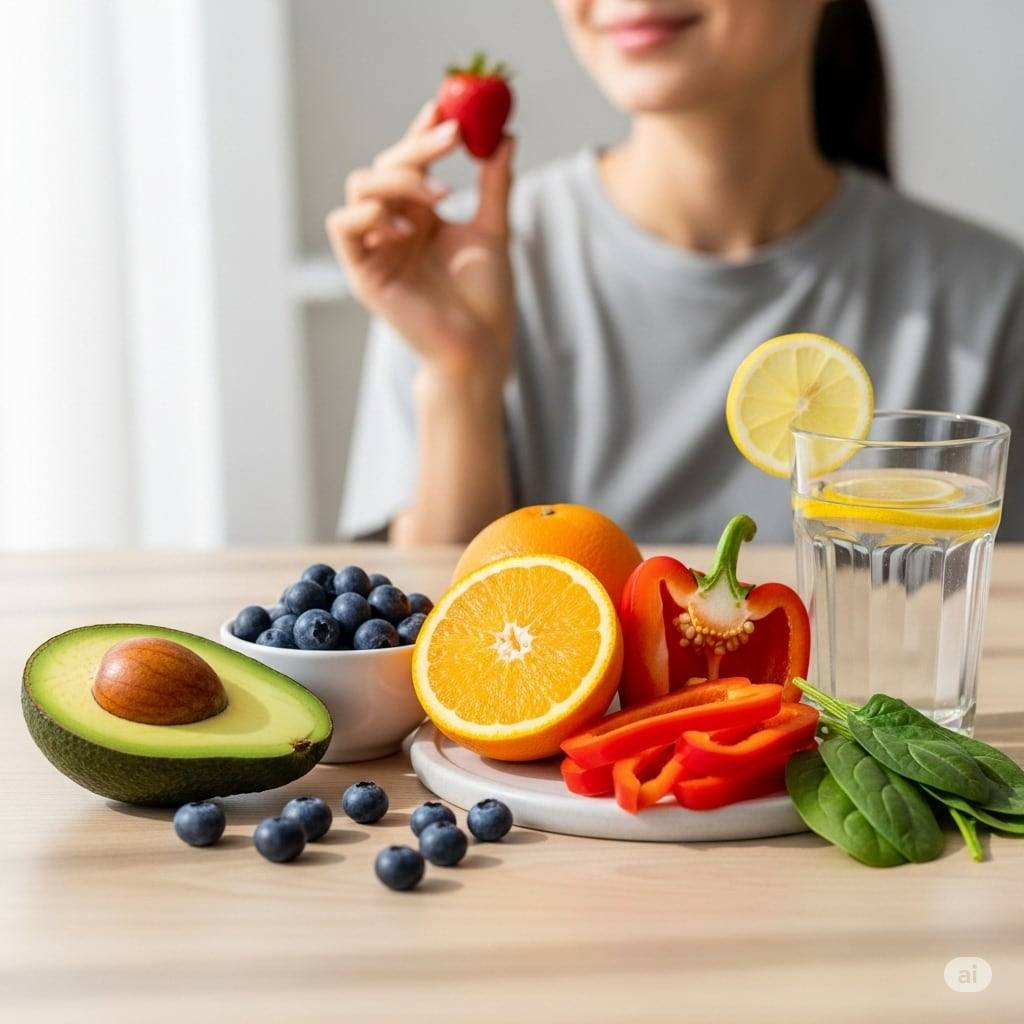
These foods, such as strawberries, blueberries, bell peppers, and tomatoes, are truly concentrated sources of vitamins and antioxidants.
How do these foods protect my skin?
- They boost collagen: thanks to their high vitamin C content, they are essential for the production of collagen, a protein that ensures the skin’s firmness and elasticity.
- They neutralize free radicals: their antioxidants, such as lycopene and anthocyanins, protect skin cells from external stressors (pollution, sun) and prevent premature aging.
- They improve radiance: vitamin C supports good blood circulation, which translates into a fresher, more luminous complexion.
Practical tip: eat a wide variety of berries and colorful vegetables every day. Consider eating them raw to preserve their vitamin C content.

3. How do avocados, nuts, and seeds help hydrate my skin?
Avocados, almonds, Brazil nuts, and sunflower seeds are rich in good fats and essential nutrients that nourish the skin deeply.
What roles do good fats play?
- They maintain hydration: the fatty acids they contain strengthen the skin barrier, which helps the skin stay supple and hydrated.
- They protect the cells: vitamin E, a powerful antioxidant, protects the skin from damage caused by free radicals and UV rays.
- They fight blemishes: zinc, found in nuts and pumpkin seeds, helps regulate sebum production, which is particularly useful for acne-prone skin.
Practical tip: add avocado to your salads or toast, and sprinkle a handful of nuts or seeds over your dishes.
4. Why is green tea an elixir for the skin?
Green tea is much more than a simple drink: it is a concentrate of benefits for the skin, thanks to its wealth of polyphenols, notably EGCG.
What are the benefits of green tea for my skin?
- It protects against aging: its powerful antioxidants protect the skin from damage linked to pollution and UV rays, helping to prevent wrinkles and dark spots.
- It soothes sensitive skin: green tea’s anti-inflammatory properties help reduce the redness and irritation associated with acne, rosacea, or psoriasis.
- It improves elasticity: it can help improve the skin’s suppleness for a more youthful appearance.
Practical tip: drink 2 to 3 cups of green tea a day. You can also use it as a compress to soothe irritated areas.

5. How are dark leafy greens the cell repairers?
Vegetables such as spinach, kale, and arugula are true champions of nutrition for the skin, and often underestimated.
How do these vegetables work for my skin?
- They reduce dark circles and redness: the vitamin K they contain strengthens the blood capillaries, which can help diminish the appearance of dark circles and couperose.
- They support cell repair: rich in vitamin A, these vegetables are crucial for skin cell renewal and tissue repair.
- They detoxify: chlorophyll helps purify the blood and eliminate toxins, contributing to a clearer complexion.
Practical tip: include these green vegetables in your daily meals, in a salad or steamed, to enjoy their benefits.
Conclusion: the secret to beautiful skin
Beautiful skin is cultivated from within. By including these five categories of food in your diet, you give your skin the essential nutrients to fight aging, repair itself, stay hydrated, and protect itself. The secret lies in consistency: a varied, balanced diet, combined with good hydration and sun protection, is the key to revealing your skin’s natural radiance.
FAQ
Do these foods replace sunscreen?
No. Although certain nutrients such as omega-3s or beta-carotene offer internal protection against UV damage, they in no way replace applying sunscreen, which is essential to protect your skin from sunburn and photoaging.
How often should I eat these foods to see results?
The effect of diet on the skin depends on consistency. Introduce these foods gradually and eat them daily to benefit from their effects over the long term. The first changes may be visible after a few weeks or a few months.
Is chocolate good for the skin?
Dark chocolate, rich in flavonoids (antioxidants), can have beneficial effects on the skin. However, it is important to choose a chocolate with a cocoa content of at least 70% and to eat it in moderation. Milk chocolate, for its part, often contains a lot of sugar, which is a factor in inflammation and can contribute to acne breakouts.
Are there other foods that are good for the skin?
Yes, many other foods are excellent for the skin. They include white tea, turmeric, ginger, yogurt (for the probiotics that support good gut health), and citrus fruits (for their vitamin C). A rich, varied diet is the best asset for healthy skin.